Which Deck and Pergola Privacy Screen Is Right for You?
Last Updated: November 19, 2026
Quick Summary
The best deck and pergola privacy screen depends on your yard layout and sightlines. Slatted wood screens balance privacy with airflow, solid panels block the most view, and outdoor curtains offer seasonal flexibility. Walk the space at seated height to find where a privacy screen is needed before choosing a type.
- Walk the deck at seated height to map where neighbouring windows and walkways look in.
- Slatted screens balance privacy with airflow and suit most decks well.
- Solid panels block the most view but need footings, framing and finishing.
- Outdoor curtains on a pergola offer flexible privacy and can be opened on quiet days.
- Check local bylaws before building a tall or solid screen near a property line.
Table of Contents
- Why Decks and Pergolas Need Privacy Planning First
- Deck Privacy Screen Ideas for Different Yard Layouts
- Wood Slat Privacy Screen for Deck Installations
- Pergola Privacy Panels and Curtains Compared
- Cost, Installation Effort and Building Permits in BC
- Planning Your Privacy Screen With Westland Design
- Frequently Asked Questions
Privacy on a deck or under a pergola is one of the most common reasons homeowners in Greater Vancouver start an outdoor project, and one of the easiest to get wrong. A screen that looks perfect on a sunny Saturday can block the breeze you wanted, cast the whole patio in shade, or invite a permit question you never expected. The right answer usually starts with understanding how your yard is laid out before choosing a material.
This guide walks through the main deck and pergola privacy screen ideas, how they compare on cost and installation effort, and the questions that help you decide. A privacy screen is any vertical element that blocks sightlines between your outdoor space and neighbouring properties while still letting you enjoy the area. Used well, it creates a private retreat without making the space feel closed in.
Why Decks and Pergolas Need Privacy Planning First
Most privacy problems come from sightlines, not from a lack of fencing. A tall neighbour’s upstairs window or a passing walkway can see straight onto a deck even when the yard looks enclosed from ground level. Walk the space at seated height before you commit to anything.
Planning first also protects your budget. Changing a screen after installation means paying for demolition and rebuilding, which is the most expensive mistake in this kind of project. Measure the sightlines, note which direction the sun crosses the space, and decide how much light and airflow you need to keep.
Deck Privacy Screen Ideas for Different Yard Layouts
The right screen depends heavily on the shape of your yard. A long narrow lot needs a different approach than a corner property with two exposed sides. The table below compares the main options on the factors that usually decide the project: relative cost, installation effort, maintenance, and how well each blocks sightlines while keeping light and air.
| Screen type | Relative cost | Installation effort | Maintenance | Best for |
|---|---|---|---|---|
| Solid panels (cladding or fencing) | High | High, footings, framing, finishing | Low to moderate; repaint or restain every few years | Very close neighbours; full view blocking |
| Slatted screens (wood or composite) | Moderate | Moderate, can attach to existing railing or posts | Moderate; wood needs sealing, composite less so | Most decks; balancing privacy with airflow |
| Lattice with climbing plants | Low to moderate | Low to moderate, frame plus planting | Moderate; pruning and training | Softer, greener look where time allows |
| Freestanding planters with trees or tall shrubs | Moderate | Low, no footings if portable | Moderate; watering and seasonal care | Renters and larger decks where a fixed wall feels heavy |
| Outdoor curtains | Low | Low, track or rod in an afternoon | Moderate; fabric cleaning and storm removal | Flexible, seasonal privacy |
Costs depend on the screen type, materials, the size of the area, and how much of the work you do yourself. Pricing varies with quantity, materials and delivery, so request a written quote for your specific project from Westland Design.
Small decks often do best with a single slatted panel on the most exposed side. Larger decks may need two or three smaller screens placed at the points where sightlines actually meet. Before choosing a type, walk the space at seated height and note where neighbouring windows, walkways, or upper floors look onto the deck. That sightline map, not the catalogue, should drive the layout.
Watch out: attaching a heavy panel to an older railing without checking its anchoring can create a safety problem, especially in wind-exposed locations.
Privacy by Sightline and Orientation
Orientation matters as much as height. A screen on the north side of a deck blocks little sun, while one on the west side can create strong afternoon shade. Stand where you normally sit and look toward each neighbouring window. The spots where you can see into a neighbour’s space, or they can see into yours, tell you where the screen needs to go. Note the sun’s path across the deck at the times you actually use it, and check whether a proposed screen would shade a seating area you want warm in the evening. A screen that solves a sightline but kills the afternoon sun is a common regret.
Wood Slat Privacy Screen for Deck Installations
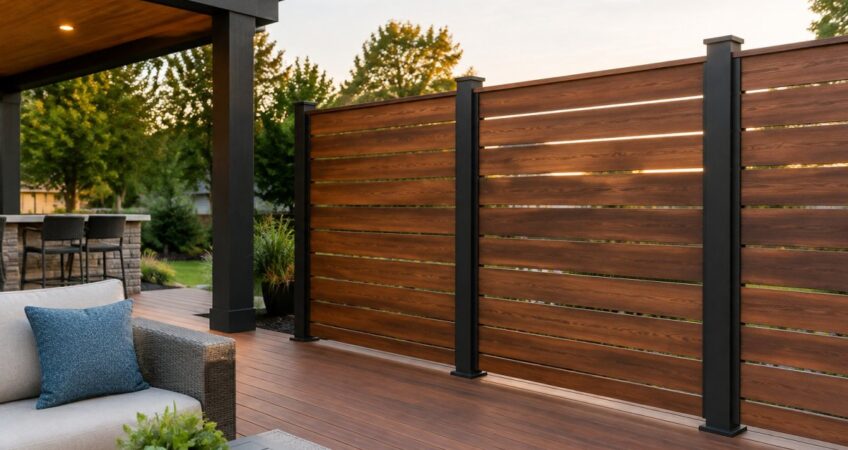
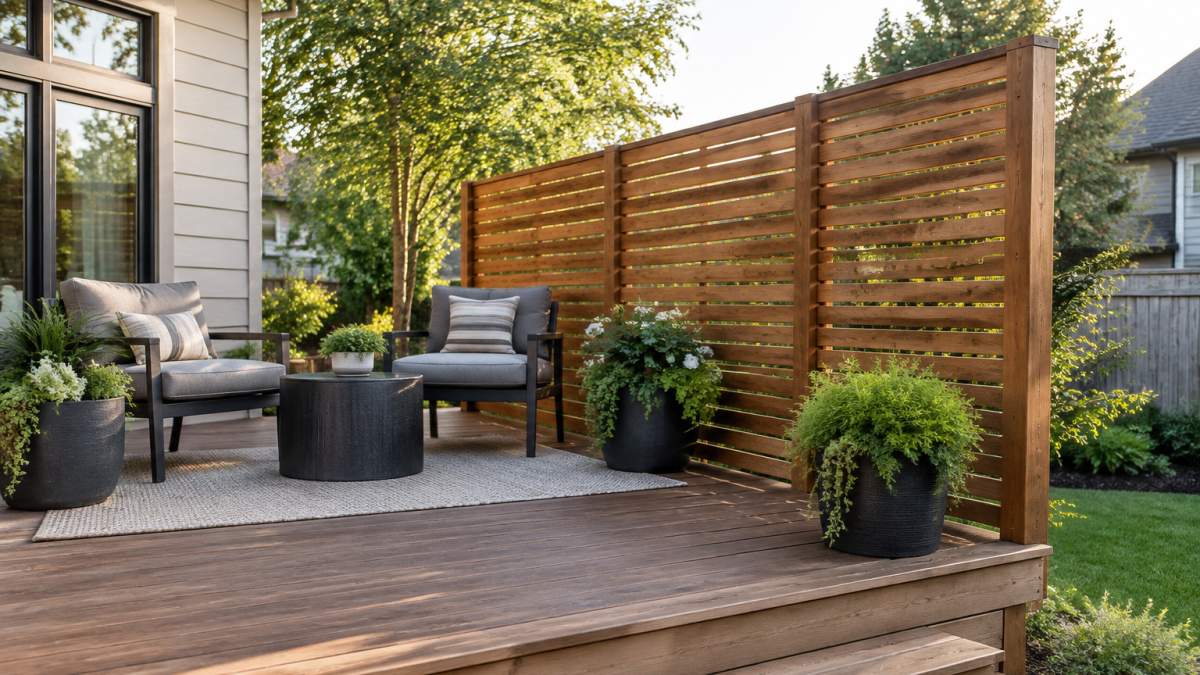
Wood slat screens are among the most popular deck privacy choices because they balance privacy with a clean, finished look. The gaps between slats let breeze through and keep light on the deck, which is why they suit smaller outdoor spaces well.
Cedar and treated lumber are common choices for slats. Spacing the slats closer together increases privacy, while wider gaps favour airflow. Plan the spacing before cutting, because adjusting it later is time-consuming.
Installation effort varies. If you are weighing a deck screen against a more solid option, you can also look at our stone walls and hardscape work as a complement to a wood slat screen. A slatted screen attached to an existing deck railing takes far less work than a freestanding panel set in concrete footings. Confirm how the screen will be fixed before you buy materials.
Pergola Privacy Panels and Curtains Compared
A pergola already provides shade and structure, so adding privacy to it is a natural step. Two approaches dominate: fixed panels and fabric curtains.
Fixed panels, such as slatted or solid wood sections fitted between posts, give permanent privacy and a more built-in look. They are harder to change later but work well when the sightline is constant. Curtains hung from the beams offer flexibility. You can pull them across for privacy and open them on quiet days, which suits homeowners who want seasonal control.
Pergola Curtains for Privacy Without Blocking Airflow
Outdoor curtains made from weather-resistant fabric are a practical way to add privacy without closing the space in. Choose a fabric rated for outdoor use, and hang it on a track or rod that can handle wind. Curtains look best when they are tied back neatly when not in use, and they should be taken down or secured in strong storms. Leave the sides partly open if breeze matters to you.
Cost, Installation Effort and Building Permits in BC
Costs depend on the screen type, materials, the size of the area, and how much of the work you do yourself. As a rough planning framework, fabric curtains and freestanding planters sit at the low end, slatted screens and lattice fall in the middle, and solid panels or built-in walls sit at the high end because they need footings, framing and finishing. Installation effort follows the same order: a curtain can be hung in an afternoon, a slatted screen attached to existing structure may take a weekend, and a fixed wall with footings can run several days. Pricing varies with quantity, materials and delivery, so request a written quote for your specific project rather than relying on general estimates.
Permits are a separate question, and this is where many projects go wrong. Privacy screens may be regulated under municipal bylaws, and rules differ between municipalities, so check with your local building department before you build anything tall or permanent. Do not assume a screen is exempt because it is not a full building.
Structural safety matters too. A screen must be anchored properly to withstand wind loads. If you are unsure whether a proposed screen needs a permit or engineered anchoring, ask before you buy materials.
Watch out: check local bylaws before building a tall solid screen close to a property line.
Planning Your Privacy Screen With Westland Design
The best privacy screen is the one that fits your yard, your sightlines and the way you actually use the space. Start by mapping the views you want to block, the light and breeze you want to keep, and a realistic budget. Then decide between a fixed screen and a more flexible option.
If you want help turning those decisions into a finished design, you can browse our completed projects to see how similar yards have been handled, or review the services we offer for deck and pergola privacy work. When you are ready to talk through your site, contact the Westland Design team for a quote and local guidance on your specific yard.
Frequently Asked Questions
How do I add privacy to a deck with a pergola?
Start by identifying which sightlines matter most, usually the side facing a neighbour’s windows or a busy lane. Privacy panels or slatted screens can be mounted to the pergola posts and beams on those sides, leaving the open sides clear for airflow and light. Pricing depends on materials, dimensions and site conditions, so request a quote from Westland Design for current figures.
What is the best material for an outdoor privacy screen?
Rot-resistant woods such as cedar look natural but need periodic sealing to hold up to wet weather. Composite and aluminum options generally need less upkeep. The right choice depends on exposure to rain, sun and wind. The right choice depends on exposure to rain, sun and wind, and how much upkeep you want to commit to.
How high should a deck privacy screen be?
Check your municipal bylaws before building, since height limits and permit requirements vary by municipality. Taller screens need sturdier support, so structural safety should be reviewed before installation. A design consultation can help balance height with light and airflow.
Are plants a good way to create privacy around a deck?
Hedges, climbing plants in planters and trees can create a softer, living screen that improves over time. Choose species suited to your local climate and sun exposure, and plan for irrigation and pruning.

